

WRITING PRACTICE
BENIFITS/DRAWBACKS OF BUYING PRODUCT DIRECTLY FROM LOCAL FARMERS
From a Chinese perspective, buying products directly from local farmers has both benefits and challenges.
On the positive side, many Chinese consumers are increasingly concerned about food safety, and purchasing directly from farmers can give them greater confidence in knowing where their food comes from. Fresh vegetables, fruits,meats often taste better and have fewer chemical additives compared to mass-produced supermarket goods. In addition, supporting local farmers is a way to preserve traditional agriculture, which is important in many rural areas like Shanghai which facing rapid urbanization.
However, there are also drawbacks. In large Chinese cities, farmers’ markets or direct supply channels are not always easy to access, busy urban residents often prefer the convenience of supermarkets or online platforms such as “MEITUAN”(a delivery platform), that deliver food to their doorstep. Moreover, without strict regulation, some small farmers may not meet the same quality or standards as larger suppliers. In conclusion, while buying directly from local farmers in China can provide healthier food and support rural communities, it is not always the most convenient or reliable choice for people living in modern cites.
DIFFERENCES/SIMILARITIES BETWEEN THE TEACHERS IN MY NATIVE COUNTRY TO NEW LECTURERS
Having just completed my first week on the International Foundation Programme, I have already noticed some important differences as well as similarities between the expectations of my lecturers here and those of my teachers back home.
The first and most obvious difference is the language. During IFP program,every class is conducted in English, which is quite different from my previous experience. While it sometimes makes learning more challenging, it also provides me with valuable opportunities to improve my communication skills in an international setting. A second difference is the teaching approach. Lecturers here often encourage group work, which requires me to collaborate with classmates from different cultural and educational backgrounds. This helps me to develop teamwork skills and broaden my perspectives. A third difference is the emphasis on independent thinking. Rather than simply giving us direct answers, lecturers prefer to guide us and leave more space for us to reflect, analyse, and solve problems ourselves.
Despite these differences, I have also found some similarities. Both in my home country and IFP, teachers aim to create a relaxed classroom atmosphere. They are friendly, approachable, and often use humour, which makes learning more enjoyable and less stressful.
Overall, I really appreciate my lecturers in IFP. Their supportive and open style of teaching makes me feel welcome, and I am excited to continue studying in this environment.


PEER FEEDBACK
Before the peer-review session, I felt a bit nervous and defensive since I had never done this kind of activity at school before. I felt like all of my classmates were so good at languages, and I was worried that they would focus on what was “wrong” with my writing, which might make me feel embarrassed. At the same time, I was also curious to see how others approached the same task and hoped to pick up some new ideas.
During the process, the Ladder of Feedback structure (clarify, value, concerns, suggestions) actually made me feel much safer. My partner first asked clarifying questions and pointed out what was working well in my draft, which helped me relax and recognize my strengths more clearly. When we moved to “concerns” and “suggestions,” the comments felt more objective and constructive rather than personal criticism.
Afterwards, I felt more confident and motivated to revise. The experience was much more positive than I had expected; instead of feeling judged, I felt supported. I realized that my classmates noticed issues — for example, unclear topic sentences and weak transitions — that I had stopped seeing in my own writing.
For instance, Aziz suggested deleting some repetitive or unnecessary sentences in my paragraphs and also evaluated the credibility of my sources. After applying his feedback, my paragraph became more concise and logically structured. Ece gave me a very helpful reminder — she pointed out that I should include examples and a brief explanation of what “organoid technology” actually means, along with some background information. Her comment helped me make my writing clearer and more informative.
Overall, this peer review made me feel more engaged with my annotated bibliography. Hearing others’ perspectives on the same sources made me realize how differently people can interpret them. It turned the process from something mechanical into something more meaningful, and I’d definitely like to use this approach again next time.


WEEK 8 LEARNING JOURNAL
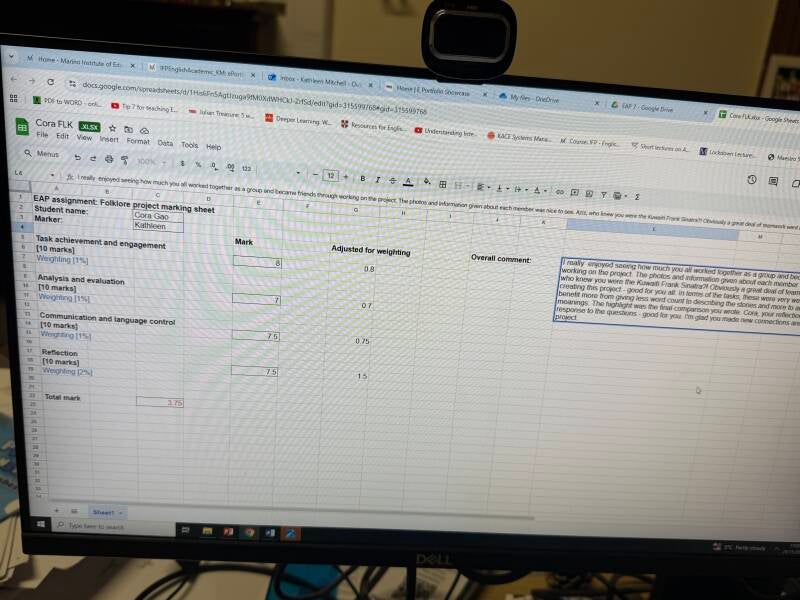
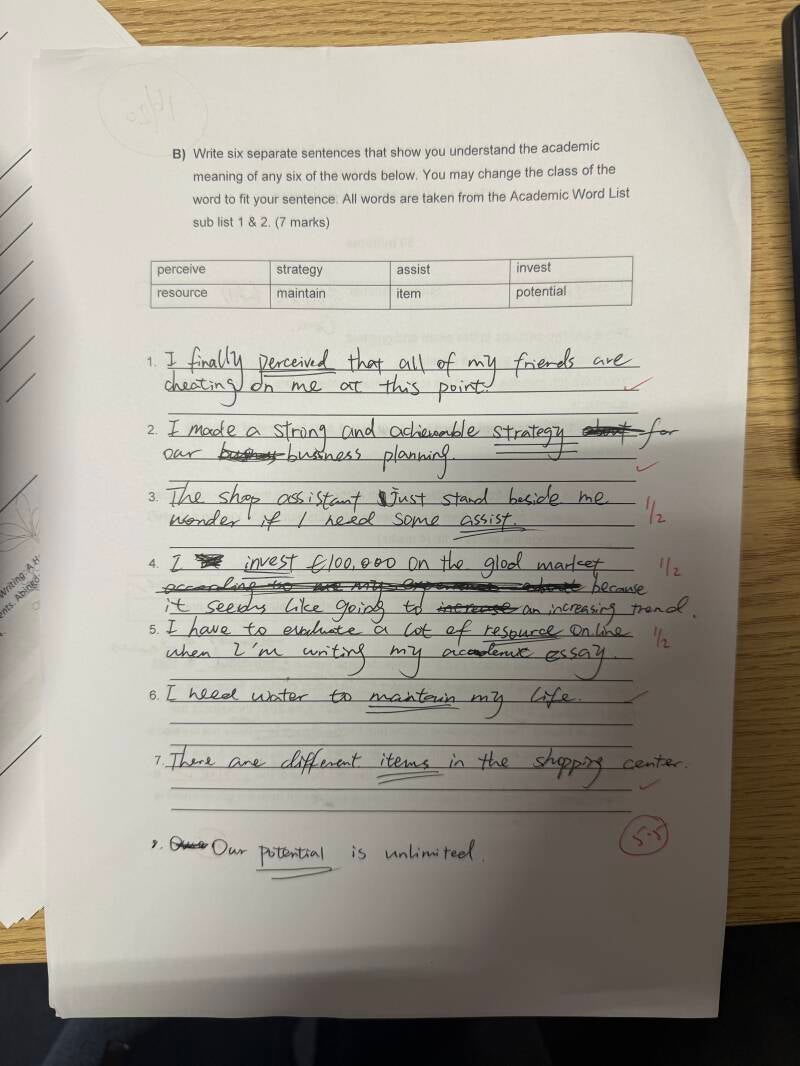
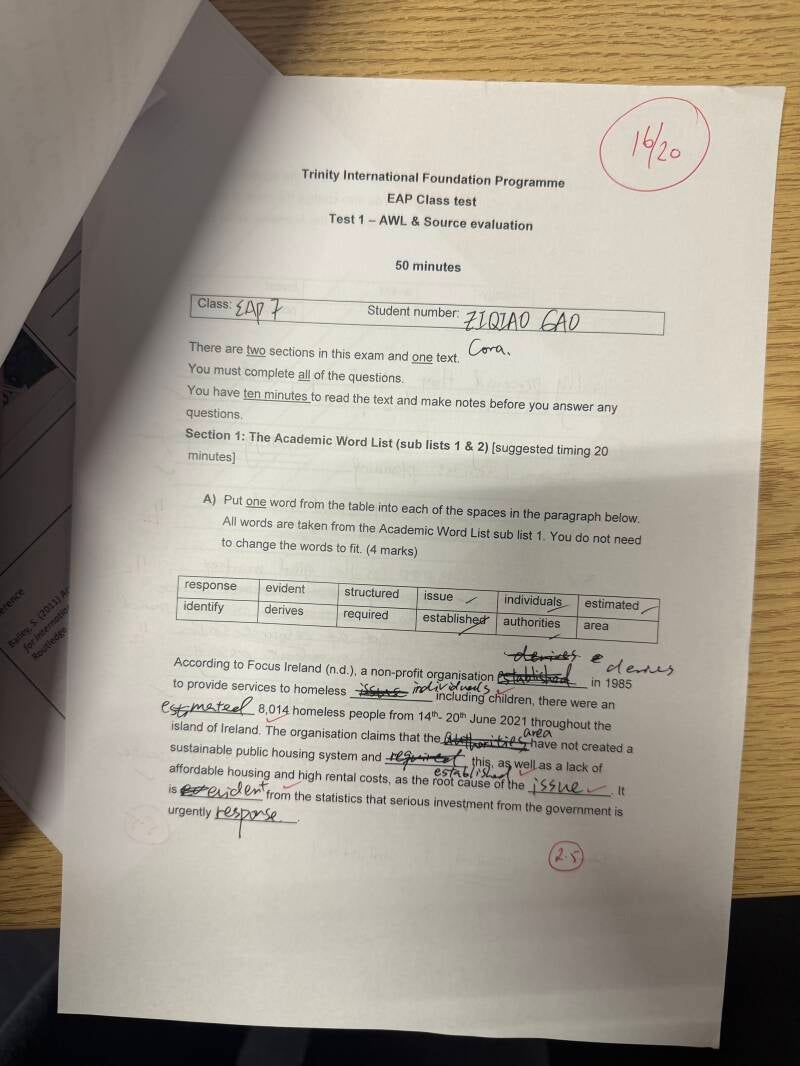
In my first class test in EAP, I feel that my overall performance was quite good. For the source evaluation section, I prepared by searching for different online articles and analysing them using the criteria of currency, relevance, accuracy, authority, purpose and academic conventions. I also tried to imagine whether I would use these sources in an actual essay, which helped me think more critically.
However, the vocabulary part on Sublist 1 and 2 did not fully meet my expectations. I made two mistakes on word meanings that I should not have missed. After the test, I reviewed these words carefully and made sure I fully understood their correct usage. In the sentence-building section, I realised that my grammar tends to slip when the sentences get longer. Fortunately, these are errors I can fix by checking more carefully, so next time I will leave a few minutes to review my answers.
Overall, I believe my preparation methods and time management were effective, and I hope to maintain this approach in future tests.

TERM 2:
ANNOTATED BIBLIOGRAPHY REFLECTION
Before starting this task, I did not expect the annotated bibliography to be so time-consuming. I assumed it would mainly involve summarising sources, but I quickly realised that it required much more careful thinking, especially when deciding how each source would actually be used in my essay. Working on the annotated bibliography for my organoid technology topic helped me slow down and really read the sources instead of skimming them.
The most stressful part of the process was definitely the formatting. Following APA7 style felt overwhelming at times, particularly when dealing with details such as italics, punctuation, and different reference formats for articles, books and videos. I often found myself spending a lot of time on small details, which was frustrating and sometimes exhausting. However, although the formatting almost drove me crazy, I gradually understood why it matters. It forces you to be precise and careful, and it makes your work look more credible and organised.
Despite the frustration, the annotated bibliography ended up being genuinely helpful. By the time I finished it, I had a much clearer idea of my essay structure and which sources would support each section. I also became more confident in evaluating the quality and usefulness of academic sources. Overall, even though the process was challenging and sometimes stressful, I now see the annotated bibliography as a valuable step in academic writing rather than just an unnecessary task.
LEARNING JOURNAL WEEK1-EXAMINATIONS REFLECTION
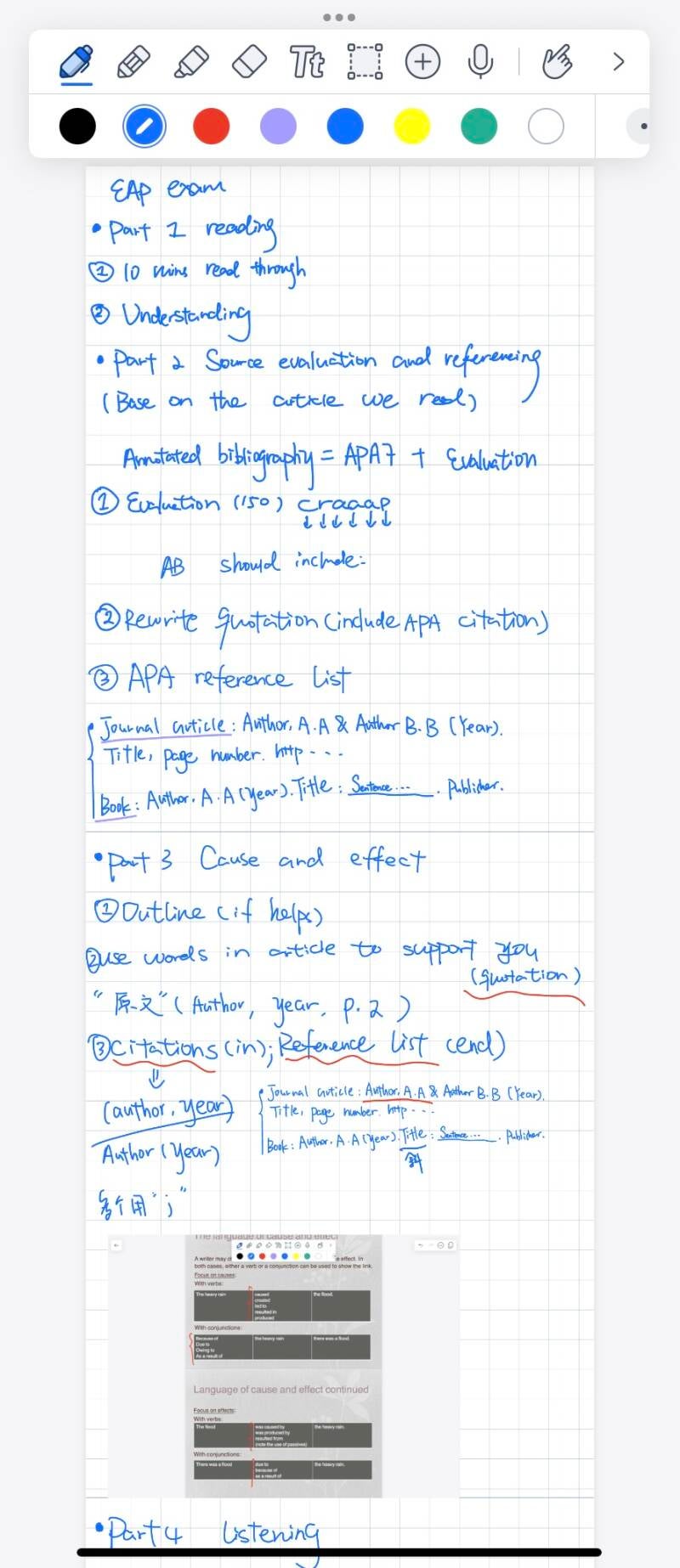
Reflecting on my exam preparation, I believe I prepared as much as I realistically could. For EAP, I see it as a subject that requires long-term accumulation rather than intensive short-term practice, so most of my study schedule focused on other subjects. However, I did review key concepts such as annotated bibliographies, citation, referencing, and evaluation, which helped me feel academically prepared.
During the exam, I felt very nervous because I was worried about running out of time. There was also a small issue where one of the questions related to finding answers in the text was incorrect, which affected my confidence at the beginning. After that moment, I found it harder to stay calm.
I would not say there was an easy section in the exam. Most questions required careful reading and deep understanding. I realized that I sometimes struggle to read efficiently while matching information to the questions. My slow working speed became a major problem, especially when I reached the writing task with less than thirty minutes remaining. This made it difficult to fully guarantee the quality of my writing.
Overall, this exam helped me understand that time management is one of my biggest challenges as a student. For future exams, I need to improve my reading efficiency and practice completing tasks under timed conditions so that I can perform with more confidence and stability.
Exam Revision Notes:
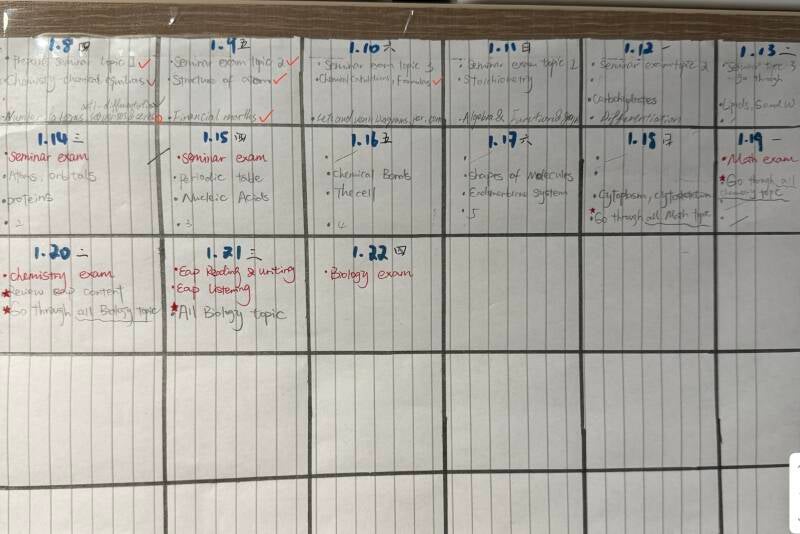
Revision Planning:
GAA PRELIMINARY RESEARCH
The Gaelic Athletic Association (GAA) is considered a major part of Irish society. Before researching this topic, I mainly saw it as a sports organisation, but I have learned that it represents much more than competition. It plays an important role in Irish culture, identity, and community life.
One thing that stood out to me was how the GAA helps preserve traditional Irish sports such as hurling and Gaelic football. In a world where many sports are globalised, it is interesting to see how Ireland continues to promote games that are strongly connected to its national heritage. This made me realise that sport can be an important way for a country to protect its culture.
I was also surprised by the strong community spirit surrounding the GAA. Many clubs depend on volunteers, and people often feel a deep sense of pride in supporting their local teams. It seems that these clubs are not only places to play sport but also spaces where people build connections.
However, what impressed me most is that the GAA remains largely amateur. Players compete for passion rather than money, which is very different from many modern sports.
Overall, researching the GAA helped me understand that it is not just about sport, but about belonging and shared identity within Irish society.
GAA PROJECT REFLECTION
Reflecting on our Gaelic Athletic Association (GAA) group project, I found it both challenging and enjoyable. One of the main challenges was communication, as most of my group members speak Arabic. Sometimes they would naturally switch to their own language, which made it difficult for me to follow. However, Houreyah explained that it feels awkward for them not to speak their native language with each other, which I found interesting. At one point, I even joked that after finally getting used to English, now it feels like it is the “Arabic era”.
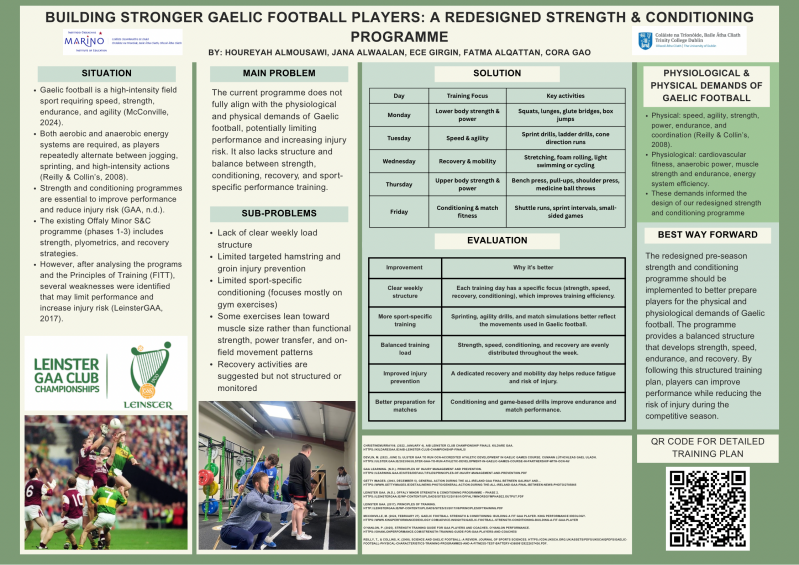
Despite this, we worked well together and respected each other’s ideas. Through discussion and compromise, we were able to gradually improve our project. In our poster, we analysed the weaknesses of an existing strength and conditioning programme and redesigned a more balanced weekly training plan for Gaelic football players, including strength, speed, recovery, and conditioning. Completing this together gave me a strong sense of achievement.
This project also helped me better understand Irish culture, especially the role of the GAA beyond sport. Compared to my previous individual presentation, I put in more effort this time. Working in a group gave me a sense of responsibility, as I did not want to negatively affect the overall result.
Overall, this experience improved both my academic skills and my ability to collaborate with people from different cultural and religious backgrounds.


REFLECTION ON MY LEARNING IN TERM 2
Reflecting on the second term so far, I have noticed a clear change in my motivation and energy compared to the first term. At the beginning of the year, everything felt new and I was more motivated to study. However, in the second term, I often feel more tired and less focused, which has affected my learning efficiency.
One of the main reasons for this change is the increased workload. Compared to the first term, all subjects have become more demanding and require more time and effort. In particular, subjects such as biology and chemistry have been quite challenging for me, and I sometimes struggle to fully understand the content.
I have also noticed that I feel more anxious during this term. When I realise how many tasks I need to complete, I often feel overwhelmed. Instead of starting immediately, I sometimes delay my work, which makes the situation worse and increases my stress.
However, this experience has made me more aware of my study habits and emotional responses. I think I need to improve how I manage my time and deal with pressure. In the future, I will try to start tasks earlier and break them into smaller steps so that they feel more manageable.


REFLECTION ON MY UNDERSTANDING OF ACADEMIC WRITING STYLE
Over the past year, my understanding of academic writing has developed considerably. I have come to recognise that academic writing requires an objective rather than subjective approach. When presenting an argument, it is important to support ideas with credible evidence, acknowledge counterarguments, and avoid overly personal language. This ensures that the writing remains balanced and academically rigorous.
I am now more confident in identifying academic texts, as they are typically characterised by a formal tone, clear structure, and the integration of evidence. One of my most significant improvements has been in organisation. My essays are now more logically structured, and I have a better understanding of how to present ideas in a coherent sequence. Additionally, through analysing model texts in class, I have learned more effective ways to express my ideas in an academic style.
However, I do not yet feel fully confident. I occasionally use informal vocabulary, and there are times when the order of my ideas could be improved. Despite these challenges, I have made clear progress compared to earlier in the year.
Looking ahead to university, I understand that a higher level of academic writing will be expected. To meet these expectations, I plan to refine my use of formal language, review my essay structure more critically, and continue engaging with academic texts. Overall, I feel more confident in my abilities, while recognising that further development is needed.